


Metal bending – Importance in modern manufacturing
Metal bending is one of the key steps in mechanical processing, turning flat sheets into various shapes. With diverse methods and materials, metal bending meets demands from architecture, furniture to heavy industry. This article will give you a clearer understanding of the process, advantages, and real-life applications.
.jpg)
What is metal bending?
Before diving deeper, it is important to define the basics.
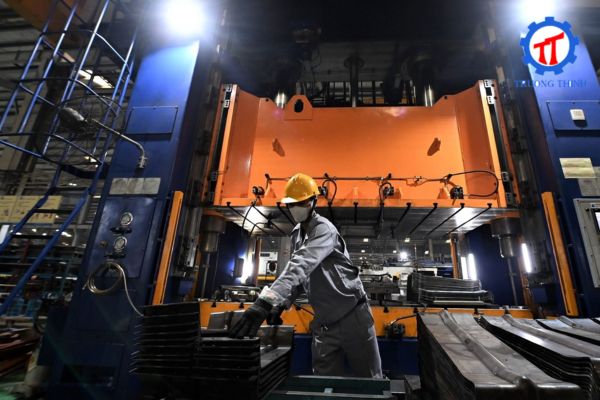
Metal bending is the process of using mechanical force or specialized equipment to transform flat metal sheets into curved, folded, or bent shapes. This process not only changes the shape but can also improve mechanical properties, ensuring metals meet strict technical standards in production.
Common methods of metal bending
.jpg)
Each method has its own advantages and is chosen depending on the product requirements.
V-bending
This is the most common method, using a V-shaped die to create precise angles. Metal bending with this method allows for adjustable angles, suitable for frames and brackets.
Bottoming
In this method, the metal sheet is pressed between two dies to achieve high precision. Bottoming is often used for small, complex products requiring minimal tolerance.
Air bending (pneumatic)
Air pressure generates stable and flexible force, especially suitable for thin and lightweight metal sheets. This technique ensures high accuracy without surface deformation.
Roll bending
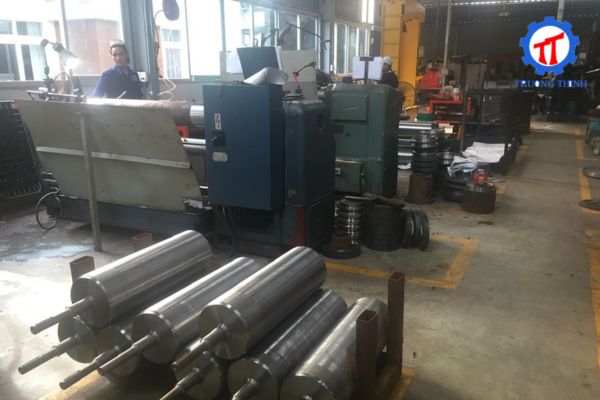
Uses a system of rollers to bend metal into tubes or continuous curves. Roll bending is commonly applied in steel pipe and industrial duct manufacturing.
Rotary bending
Here, the metal sheet is fixed and rotated around an axis while force is applied. Rotary bending creates complex curves, widely used in automotive and aerospace industries.
Edge bending and wipe bending
Edge bending creates stiffening ribs, while wipe bending applies uniform pressure to form smooth curves. Both methods enhance the product’s durability.
Materials used in metal bending
The choice of material determines product quality and lifespan.
-
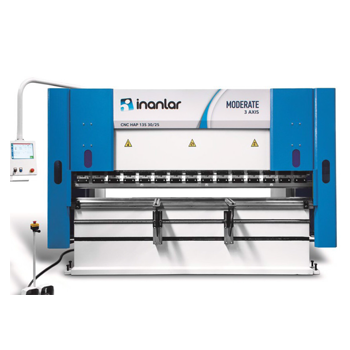
Steel: Strong, rigid, easily bent with press brakes; ideal for construction and heavy industry.
-
Aluminum: Lightweight, corrosion-resistant, widely used in automotive and aerospace manufacturing.
-
Stainless steel (Inox): Elegant, wear-resistant, popular in food and medical industries.
-
Copper: Excellent conductor of heat and electricity, used in electronics and specialized projects.
Key considerations in metal bending
To ensure optimal results, several factors must be considered:
-
Tolerance control: Small deviations make assembly easier and meet technical standards.
-
Proper heating: Some metals need pre-heating to increase ductility.
-
Avoid sharp inside corners: Sharp angles can cause cracks; larger bend radii are recommended.
Practical applications of metal bending
.jpg)
Metal bending is widely used in many fields:
-
Construction: Steel frames, railings, canopies.
-
Furniture: Tables, chairs, metal cabinets, stair handrails.
-
Automotive & aerospace: Vehicle frames, ducts, high-precision components.
-
Electrical & electronics industry: Casings, component brackets.
Trusted providers of metal bending services
In a competitive market, choosing a reliable provider is crucial. Companies such as Cơ Khí Trường Thịnh own modern machinery, skilled technicians, and internationally standardized processes. They are the ideal choice for businesses needing precise, fast, and high-quality metal bending services.
Conclusion
Metal bending is a crucial step that ensures both aesthetics and durability of finished products. With diverse methods, materials, and applications, it meets demands from industrial production to interior and architectural design. To achieve the best results, businesses should choose reputable providers equipped with modern technology and skilled teams. This is the most effective solution for high-quality, durable, and cost-efficient projects.
Contact information:
Hotline: Mr. Hưng: 0936.988.978 – Mrs. Tâm: 0904.488.455 – 0225.627.79.97
Production workshop address: Zone C, No. 57 km5, Lam San, So Dau Ward, Hong Bang District, Hai Phong, Vietnam
Website: http://cokhiphutrotruongthinh.com