


What is Mechanical Processing? Detailed Information from A–Z
What is mechanical processing? This is one of the key stages in the mechanical industry, playing a decisive role in product quality. The process uses machinery, technology, and physical principles to create mechanical parts with high precision. This article will help you clearly understand the concept, methods, and common mechanical processing procedures today.
.jpg)
What is Mechanical Processing?
Mechanical processing is the process of using machinery, technology, and physical principles to transform raw materials into finished mechanical parts and components. Engineers rely on technical drawings, select suitable materials, and carry out processing steps such as turning, milling, planing, drilling, grinding, bending, welding, laser cutting… to meet precise requirements for size, shape, and surface quality.
Mechanical processing plays an important role in manufacturing machinery, industrial equipment, consumer products, and many other fields. Depending on the purpose, product, and technical requirements, different technologies will be applied to achieve optimal efficiency.
Common Mechanical Processing Methods
.jpg)
Mechanical processing is divided into several types. Below are the most widely applied methods.
Non-chip Processing
Non-chip processing is a method that uses pressure or heat to change the shape of materials without creating chips (waste material layers). Common operations include casting, forging, pressing, hot stamping, welding, drawing… This method is suitable for parts that do not require high precision, with products needing further finishing before use.
Chip-producing Processing
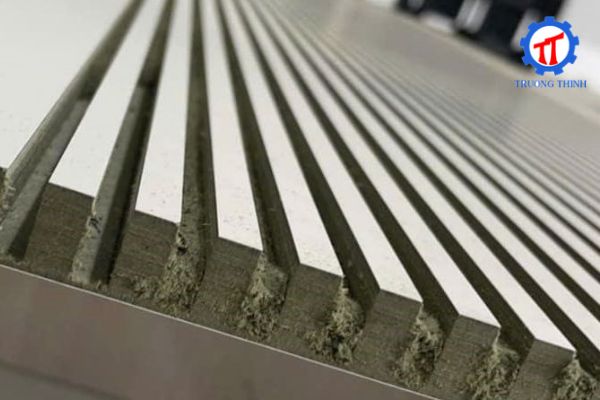
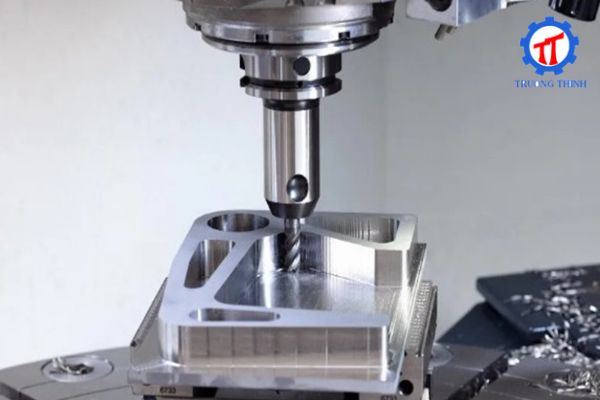
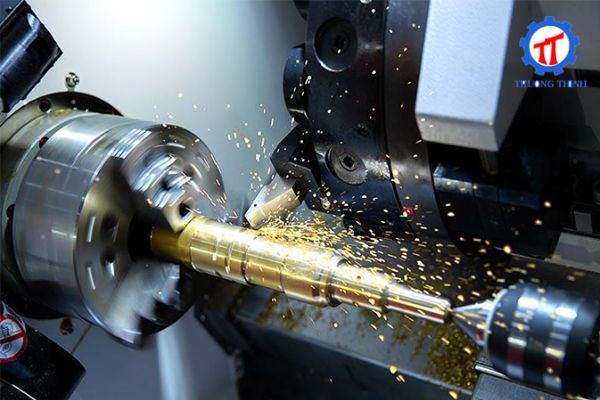
Chip-producing processing (or cutting machining) is based on removing excess material to achieve the desired size, shape, and smoothness. This technology includes turning, milling, grinding, planing… and is often used for products requiring high precision. Its main feature is the constant creation of chips during processing.
See more: http://cokhiphutrotruongthinh.com/gia-cong-co-khi-gia-re-theo-yeu-cau-chat-luong-uy-tin-bv.html
Classification by Precision Level
What are the classifications of mechanical processing? Before choosing a method, mechanical processing can be classified according to the level of finishing.
Rough Machining
Rough machining removes a large amount of excess material to create the general shape of the part. This method does not require high precision and often uses slow cutting speeds with deep cuts.
Finishing Machining
Finishing machining removes the small amount of remaining material after roughing to achieve high accuracy and a smooth surface. This method requires high speed, shallow cuts, and careful control.
Super-finishing
Super-finishing uses advanced technology and special tools such as single-crystal diamond cutters to achieve extremely high accuracy and ultra-smooth surfaces. It is often applied in aerospace, medical, and optical technology.
Traditional and Modern Mechanical Processing
.jpg)
Over time, mechanical processing has evolved significantly between traditional and modern methods.
Traditional Mechanical Processing
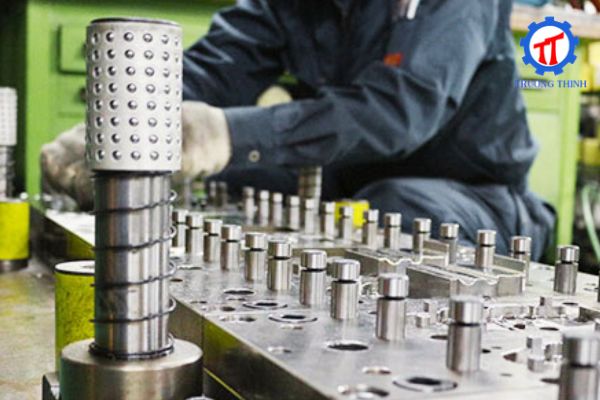
Uses cutting tools harder than the workpiece to remove material. Advantages include ease of implementation and ability to work with many materials, but precision depends heavily on the worker’s skill.
Precision Mechanical Processing (CNC)
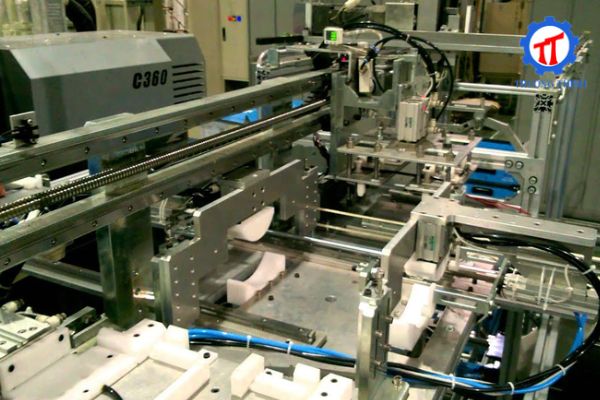
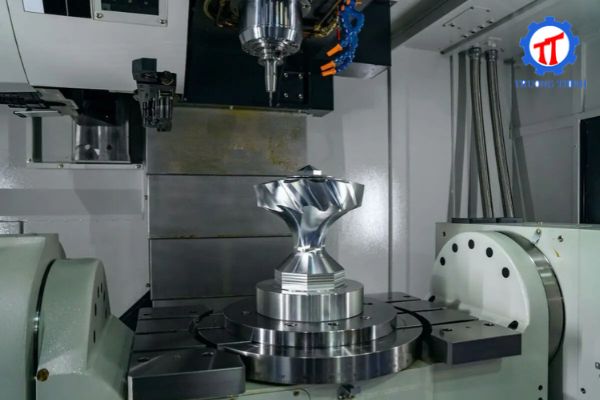
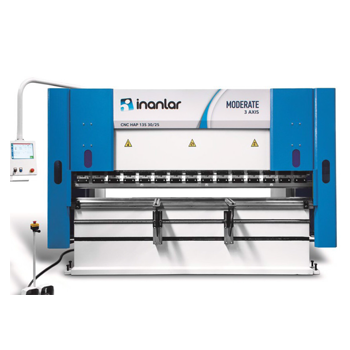
What is precision mechanical processing? This modern method uses CNC machines with integrated control software to automate production. CNC increases accuracy, repeatability, productivity, and can handle complex parts that traditional methods struggle to produce.
Mechanical Processing Procedure
What is the mechanical processing procedure? To meet standards, the process usually goes through the following steps:
-
Study the technical drawing – Engineers analyze the drawing, select materials, and choose appropriate methods.
-
Determine the production method – Includes single-piece, batch, or mass production depending on quantity.
-
Select the raw material (blank) and blank-making method – Choose optimal size and material to save cost.
-
Perform machining – Apply suitable technology and machinery for each stage.
-
Quality inspection – Measure size, smoothness, and tolerance with specialized equipment.
Applications of Mechanical Processing
Mechanical processing is present in almost all industries: machine manufacturing, automobile production, aerospace, shipbuilding, medical equipment, electronics… It is the foundation for creating components and products that meet standards for both domestic and export markets.
Conclusion
What is mechanical processing? It is a crucial process that determines the quality and durability of mechanical products. Depending on requirements, methods from traditional to modern, from rough machining to super-finishing, can be applied. The development of technology, especially CNC, has elevated the mechanical industry, enabling products to achieve high accuracy while saving production costs and time.
Contact Information:
???? Hotline: Mr. Hưng: 0936.988.978 – Mrs. Tâm: 0904.488.455 – 0225.627.79.97
???? Production workshop address: Zone C, No. 57, Km5, Lam San, So Dau Ward, Hong Bang District, Hai Phong
???? Website: http://cokhiphutrotruongthinh.com