


What is CNC Milling Processing? Methods You Need to Know
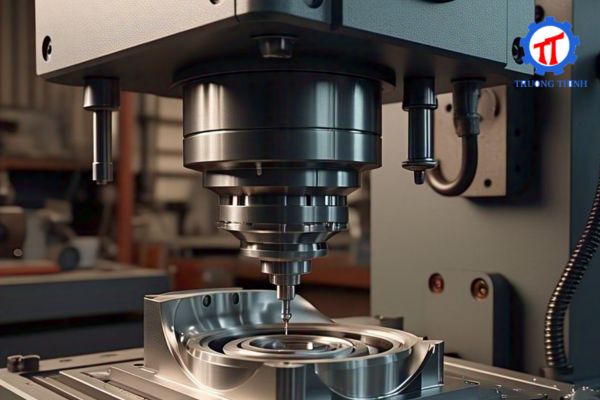
CNC milling processing is a modern mechanical technology that applies automation and computer programming to create products with extremely high precision. Thanks to its flexible machining capability, CNC milling is widely used in industries such as aerospace, automotive, electronics, and healthcare. This method helps reduce production costs, minimize errors, and significantly improve productivity for manufacturing businesses.
.jpg)
What is CNC Milling Processing?
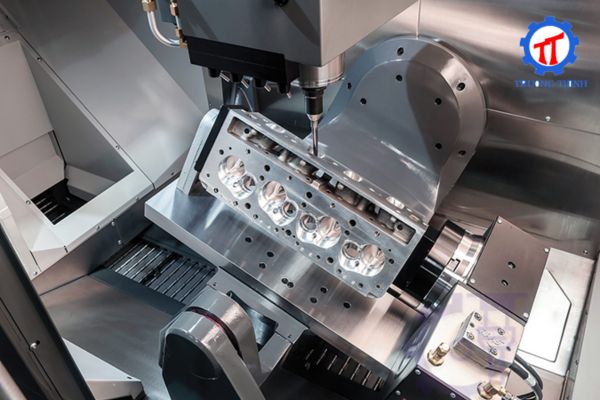
CNC milling processing is the process of using computer-controlled machinery to cut and shape materials into parts with precise dimensions and forms according to design drawings. With an automatic programming system, it minimizes human errors, ensures high accuracy, and delivers exceptional processing speed. This is a crucial solution in modern production, meeting the strictest requirements of industrial manufacturing.
Outstanding Advantages of CNC Milling Processing
.jpg)
CNC milling processing offers many outstanding advantages compared to traditional milling methods.
Absolute Precision
Thanks to computer-controlled systems, CNC milling achieves an extremely low error rate of about ±0.01mm. The machined parts have smooth, shiny surfaces, ensuring aesthetics and durability.
Superior Efficiency and Productivity
CNC milling machines can operate continuously 24/7 with high stability. The high spindle speed combined with precise control significantly shortens machining time.
Flexibility in Material Handling
CNC milling processing is compatible with many materials such as metals, plastics, wood, and composites. Whether the parts are complex or simple, this technology ensures perfect quality.
Cost-Effective Production
High automation reduces labor costs, minimizes material waste, and optimizes production processes. Particularly for mass production, the cost per part is much lower.
Expanding Creative Possibilities
Thanks to flexible programming capabilities, CNC milling processing allows manufacturers to realize complex design ideas that are difficult to achieve with traditional methods.
Standard CNC Milling Processing Procedure
Modern CNC milling processing follows four standardized steps:
-
Create a 3D design model (CAD) of the part.
-
Convert the model into CAM language, generating G-code for the CNC machine.
-
Set up the milling machine, fix the workpiece, and select suitable tools.
-
Execute the machining process, where the CNC machine automatically cuts and shapes materials according to the programmed commands.
The entire process is controlled by specialized software, ensuring every part meets dimensional and tolerance standards.
Common CNC Milling Processing Methods
CNC milling is divided into several methods depending on production purposes:
-
Face milling: Creates smooth flat surfaces, commonly used in machine and automotive manufacturing.
-
Plain milling: Produces parallel flat surfaces and removes material quickly.
-
Angle milling: Processes parts with precise angled edges such as gears and shafts.
-
Mold milling: Used for complex shapes, deep cavities, or intricate curved surfaces.
Each method is optimized through CNC technology to enhance productivity and accuracy.
Materials Used in CNC Milling Processing
.jpg)
CNC milling can be applied to many material types depending on product requirements:
-
Metals: Steel, aluminum, copper, cast iron – commonly used in mold making, machinery, and automotive parts.
-
Plastics: ABS, POM, PC, PP – lightweight, durable, easy to machine, and used in electronics and medical equipment.
-
Composite materials: Carbon, FRP – lightweight yet strong, ideal for aerospace and advanced technology industries.
Factors Affecting CNC Milling Costs
CNC milling costs depend on several factors such as:
-
Complexity of the part.
-
Type of material and tolerance requirements.
-
Quantity of parts to be produced.
-
Machine type and cutting tools used.
Typically, small and simple plastic parts may cost a few hundred thousand VND, while complex metal parts can cost several million VND.
Cơ Khí Trường Thịnh – A Leading CNC Milling Processing Company in Vietnam
Cơ Khí Trường Thịnh is one of Vietnam’s leading enterprises in CNC milling processing. With a team of highly skilled engineers and modern machinery imported from Japan and Germany, the company is committed to delivering products that meet international standards — with absolute precision, excellent surface finish, and on-time delivery.
Cơ Khí Trường Thịnh provides a comprehensive machining solution — from design and programming to quality inspection — ensuring all customer requirements are met with excellence.
Conclusion
CNC milling processing is the optimal solution for modern industries, delivering precision, productivity, and outstanding economic efficiency. With advanced automation technology, it helps businesses save costs, optimize production, and create high-quality products. If you are looking for a reliable partner in this field, Cơ Khí Trường Thịnh is a trustworthy choice for all your CNC milling needs.
Hotline: Mr. Hưng: 0936.988.978 – Mrs. Tâm: 0904.488.455 – 0225.627.79.97
Factory Address: Zone C, No. 57, Km5, Lam San, So Dau Ward, Hong Bang District, Hai Phong City
Website: http://cokhiphutrotruongthinh.com